

Fact-Checking Diplomacy: Lessons from the Trump-Ramaphosa Oval Office Meeting

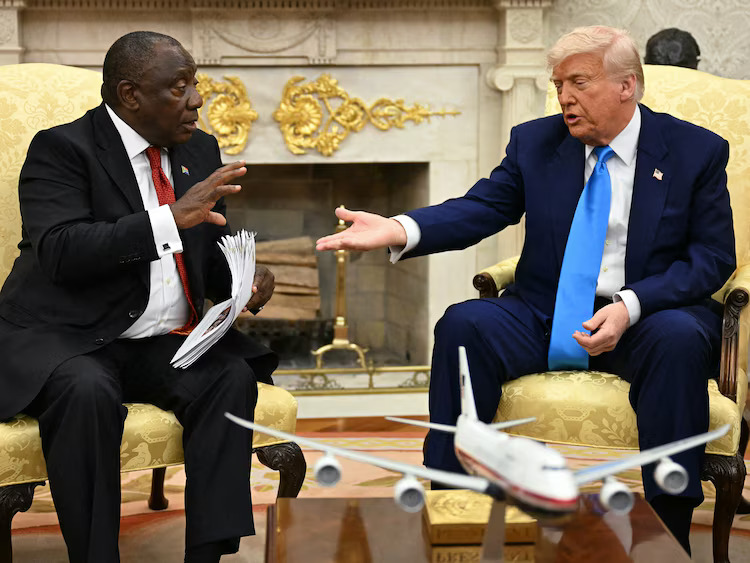
On May 21, 2025, the world watched a tense Oval Office meeting unfold between former U.S. President Donald Trump and South African President Cyril Ramaphosa. It was meant to be a diplomatic exchange between two nations, but it quickly turned into a flashpoint of misinformation and distorted narratives.

As a fact-checking organization based in Uganda, we followed keenly with particular interest, not just because of the controversy, but because of the critical role fact-checking played in defusing what could have become an international incident. The meeting reminded us that in an era where disinformation is weaponized, even in state-level interactions, fact-checkers remain a frontline defense for truth.
What Happened in the Oval Office?
During the televised meeting, Trump accused the South African government of enabling “white genocide” a long-debunked conspiracy theory often pushed by far-right groups. He went further, playing a dramatic video showing graphic images of violence, a racially charged chant (“Kill the Boer”), and a narration suggesting targeted attacks on white farmers were state-sanctioned.
🚨 JUST SHOWN IN THE OVAL OFFICE: Proof of Persecution in South Africa. pic.twitter.com/rER1l8sqAU
— The White House (@WhiteHouse) May 21, 2025
President Ramaphosa’s response was measured. He rejected the claims, stating that while crime in South Africa is real and serious, it affects all communities, not just white farmers. He also clarified that the chant came from a fringe opposition group and did not reflect government policy.
Ramaphosa denies white ‘genocide’ in SA
Trump AMBUSHES him with video evidence
Ramaphosa forced to watch EFF leader Julius Malema chanting ‘KILL THE BOER’
You can feel his discomfort https://t.co/gohB6cW3nM pic.twitter.com/Kz3cwkYlPQ
— RT (@RT_com) May 21, 2025
But it wasn’t just diplomacy that helped cool things down. It was the rapid, precise intervention by fact-checkers across the globe.
Fact Checks Done
BBC Verify did a forensic breakdown of the video Trump played. They traced one particularly gruesome image back to a 2013 robbery in Gauteng province, completely unrelated to any racial conflict. The image had been used out of context to bolster a false narrative.
The Guardian fact checked Trump’s evidence of South Africa’s ‘White genocide’ and they were images from Democratic republic of Congo.
CNN fact checked Donald Trump’s claim of a genocide against white farmers in South Africa and called it “Fake”
Face The Nation, a popular news program in America also fact checked Trump’s claims of a white genocide in America.
These fact-checks were not just about correcting the record. They served a larger purpose, they calmed tensions, protected South Africa’s international reputation, and exposed how quickly misinformation can infiltrate high-level diplomacy.
“Cyril Ramaphosa brought his best diplomatic self to this meeting, but nothing could’ve prepared him for this multimedia ambush President Trump laid out. This was a laundry list of repeatedly debunked conspiracy theories, AfriForum propaganda.”@LarryMadowo reports from Nairobi pic.twitter.com/YNE3RhYPEP
— Lauren Cone (@LConeCNN) May 21, 2025
Why This Matters
This incident may have happened thousands of miles away, but the lessons hit close to home for those of us working to counter misinformation in East Africa. For one, it revealed how African countries are often the subjects, not just sources of misinformation. And when falsehoods are spoken in rooms of power, the damage can be global.
We also saw the power of cross-border fact-checking collaboration. The checks from The Guardian, CNN, and the BBC helped build a layered, evidence-based response. No single newsroom or organization can tackle disinformation alone, especially when it’s politically charged and amplified on the world stage.
As an organization committed to media integrity and truth-telling, this moment reaffirmed our belief that fact-checking is no longer just a tool of journalism, it’s a form of public diplomacy. When leaders misrepresent facts, the consequences can cut across continents. But when fact-checkers do their job, and do it well, truth has a chance to stand tall, even in the most powerful rooms in the world.
