

Is The “Foreign Agent” Label About Security or Silencing Dissent

Explainer Series: Examining the “Foreign Agent” narrative in Uganda
The label “foreign agent”, is it about security or silencing dissent?
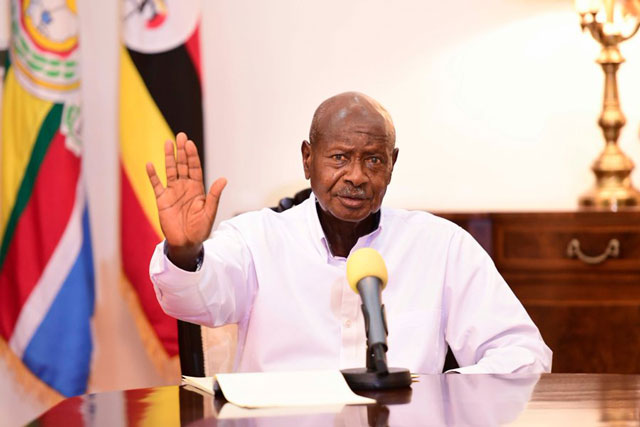
“…There are, however, other actors that get bribes from foreigners to work for foreign interests…” said the president of Uganda during the state of the nation’s address in 2024.
Research shows political leaders weaponise the term to drive a narrative that influences public opinion.
Civil Society Organisations (CSOs), critical media, and activists as “foreign agents”, suggesting that they are working on behalf of foreign powers to undermine the state. How accurate are these claims? But most importantly, the label “Foreign Agent”, Is it for state security or silencing dissent?
What is the “Foreign Agent” narrative?
The term has been used synonymously to refer to critics of the government and those who receive international funding to be potential threats to national security. This implies that their work is driven by hidden negative agendas or foreign influence.
The narrative argues that it is necessary to protect Uganda’s sovereignty and prevent external meddling in domestic affairs.
According to critics, the term serves to delegitimise dissent and restrict civil liberties.
A Ugandan human rights lawyer and former executive director of Chapter Four, Nicholas Opiyo, argues that everyone, including the government, is a foreign agent in an X space with the African Institute for Investigative Journalism (AIIJ).
“If I am an agent of a foreign power simply because I get money from everywhere, then all of us are foreign agents of that foreign power, including the state, because the private sector raises capital from foreign venture capital funds and from other sources in order to infuse that money in the economy and grow their businesses. Banks in Uganda are foreign-owned and derive capital from foreign capital. Uganda relies heavily on its development budget, particularly on foreign capital. Does it make Uganda an agent of those countries to whom they borrow loans?” He said
How it started
Africa has a long history of foreign influence of about 600 years, informed by foreign funding and “meddling” in the internal affairs of the countries from within, like during slave trade, colonialism, neocolonialism, etc., but this particular narrative about foreign-funded groups being dangerous has become louder in recent years, especially under President Yoweri Museveni and the National Resistance Movement (NRM) regime.
For instance, in 2024, Uganda’s President, Yoweri Kaguta Museveni, noted during the State of the Nation Address on June 6 that Uganda will not be threatened.
“…There are, however, other actors that get bribes from foreigners to work for foreign interests. These are both corrupt and traitors, and we are monitoring their activities. If they do not stop, with evidence, we shall deal with them. They approach our people and say, go and make a bad report against Uganda, and we shall give you an award, and it will have such money,” said Museveni in his address.
The ‘foreign agent’ narrative as used by the government is not without basis; there are indeed foreign hands with different interests, including and not limited to influencing processes in Uganda, as in the case of the previous statements by Lord Bellingham.
The challenge is that the claims are not backed by evidence of what foreign power is being represented in the different cases publicly. Additionally, as explained by Jim Ssentongo Spire, the instinct to self-preserve pushes for the narrative of when it is not serving the state, but when it does, it is not bad foreign aid.
During the X space published on YouTube, Opiyo recalled chapter four and his arrest and charge for money laundering. Several other organisations, like the Citizens’ Coalition for Electoral Democracy in Uganda (CCEDU) and other non-governmental organisations. It shall be noted that most of the victims of the suspension were critics of the government.
“For many of us who have been accused of being foreign agents, it is the first step to adverse action against you or against entities that you lead… When they begin to accuse you consistently and persistently of being an agent of foreigners, really it is a precursor; many times it ends up in adverse actions against you… When they begin to put that label on your forehead, they are making you a target. And it’s only a matter of time before they take adverse action against you.” Opiyo added in the X Space
Familiar Playbook,
Russia introduced the Foreign Agent Law in 2012, and it has been reworked over the years, which branded NGOs and individuals connected to government agencies that Russia is not a part of as foreign agents, supposedly in the name of national security, as reported here. Georgia has a similar law, among other states. The law required that all NGOs receiving external funding register as foreign agents, and now, with the parallels in language and tactics, suggests a form of ideological emulation
Although Uganda does not have the same law as Russia, the patterns, language, and rationale are all the same. Uganda’s silence on Russia’s civic repression, coupled with its vocal critique of Western influence, implies not neutrality but selective alignment.
The Security Pretext Doesn’t Hold Water
Ugandan authorities have framed the foreign agent narrative as a matter of national security, but there is no public evidence linking CSOs to espionage or violence. NGOs are required to operate with full transparency, filing reports, submitting audits, and engaging openly with communities under the watch and regulation of the non-governmental organisation bureau. The targets are almost always critics of the government, especially those that promote human rights, electoral integrity, and government accountability, among others, and not violent extremists or cybercriminals.
According to Opiyo, it is also confirmed that the narrative is framed with no evidence to discredit people, besides being linked to political propaganda and self-serving tactics.
“The motivation for doing so is not to admit the complex dynamics of global politics because if it were, it would be a lot more complicated, a lot more complex and nuanced than what President Museveni and people in government are involved in. So what they are really involved in is to first of all be the dog whistle, to paint you as somebody that has no agency, to say that you are doing the things you are doing because of the cost of funding or because of the cost of your support.”
“Therefore, you are less patriotic, you don’t love the country, and it’s extended to mean that you do not support the agenda of the government in power in Uganda… They also call you a foreign agent without naming the foreign master to whom you are a foreign agent. If I am the piper, who pays the piper? Whose agent am I? They will not tell you you are an agent of Rwanda, an agent of Tanzania, of Kenya, of America, the UK or the European Union; they will just call you a foreign agent precisely because the intention is not to call you an agent of anybody but it is to delegitimize your work in the eyes of the public by invoking nationalism as a red flag,” he continued
This mirrors a growing global trend where “national security” is redefined to mean regime stability, rather than public safety or constitutional order.
The Global Context: A Transnational Authoritarian Script
This approach is not unique to Uganda. Around the world, authoritarian governments are using similar tactics. Russia, Turkey, Hungary and India have passed laws or spread narratives like this to paint civil society as a threat. It is part of what experts call “authoritarian leaning” when regimes borrow strategies from each other to crack down on dissent.
Uganda’s Constitution, adopted in 1995, guarantees basic freedoms, including the right to speak, associate and protest peacefully. Article 29(1)(e) protects all of this;
(1) Every person shall have the right to—
(e) freedom of association, which shall include the freedom to form and join associations or unions, including trade unions and political and other civic organisations.
However, the government’s actions depict an increasing ignorance of these rights.
The foreign agent label flips the script, instead of the state proving wrongdoing, it demands that citizens prove their loyalty and not join or form associations, media and platforms that are critical of its actions as in a normal democracy. It sends the message that anyone who disagrees with the government is automatically suspicious.
The Real Impact
While national security is a legitimate concern, without definitive evidence, the accusations remain vague and yet carry serious effects, like shutting down critical voices, which weakens democracy. In a functioning democratic society, criticism is not treason.