

MISLEADING: No Evidence Muhoozi Kainerugaba Apologised to Bobi Wine in Viral Luganda Post

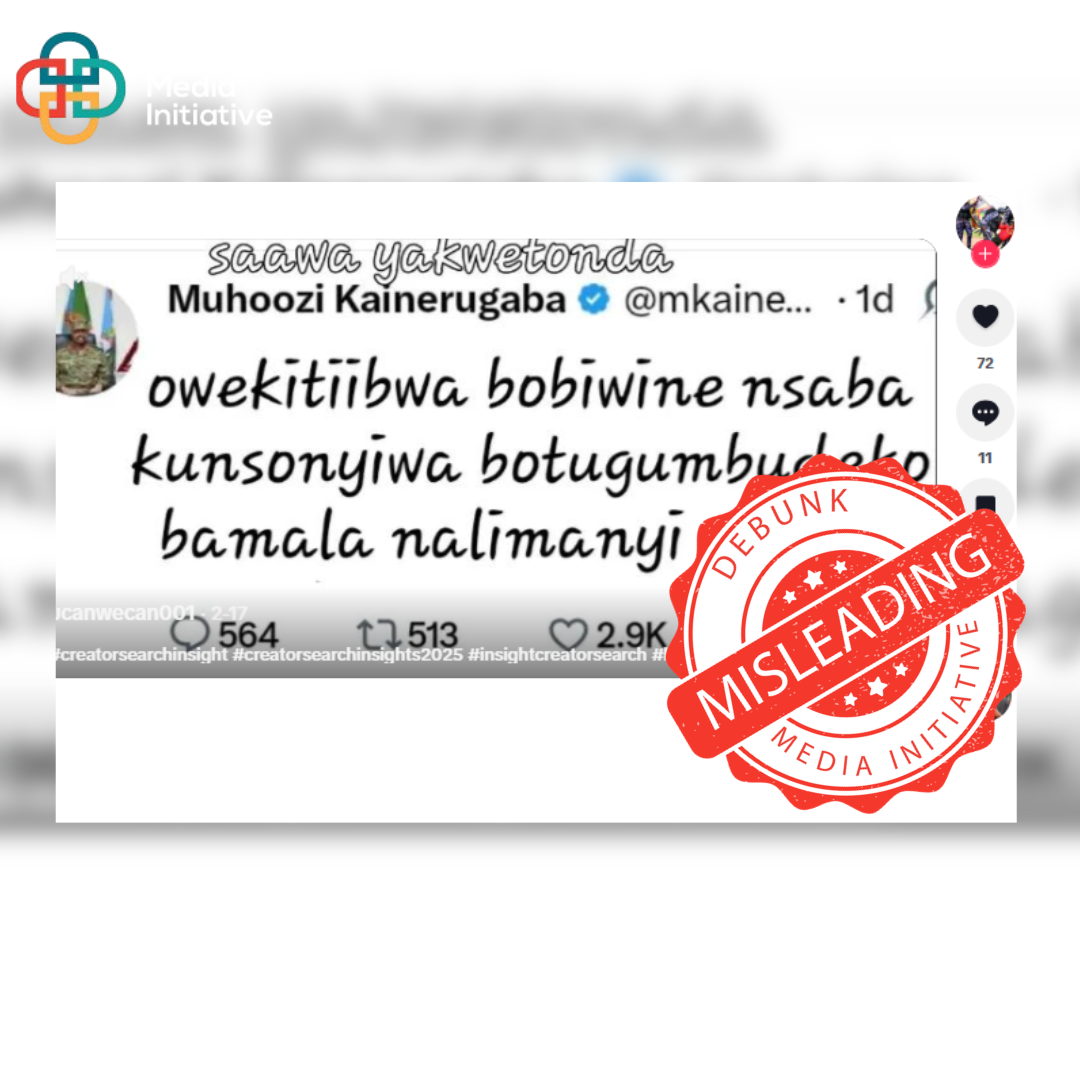
Background:
“A lie can travel halfway around the world while the truth is still putting on its shoes,” wrote Mark Twain, highlighting how easily false claims can spread before they are verified.
That reality is increasingly visible in today’s social media environment, where screenshots and graphic posts often attribute statements to public figures without confirmation. Recently, a viral post claimed that General Muhoozi Kainerugaba apologised to opposition leader Bobi Wine in a Luganda message shared on his official X account. We examined whether this apology was real.
Claim:
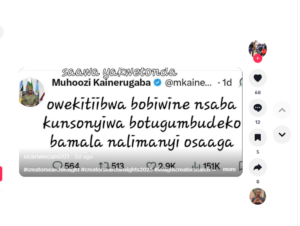
A viral TikTok video and social media graphic claim that Muhoozi Kainerugaba posted a message on his official X account apologising to Bobi Wine, stating in Luganda:
“Ow’ekitiibwa Bobi Wine nsaba kunsonyiwa botugumbudeko bamala nalimanyi osaaga.”
This translates to:
“Honourable Bobi Wine, I ask you to forgive me. The ones you have tortured are enough; I thought you were joking.”
The post is presented as originating from Muhoozi Kainerugaba’s official X account.
Findings:
Our investigation shows that this claim is misleading. There is no verified evidence that Muhoozi Kainerugaba made this statement on his official X account.
No Record of the Statement on Muhoozi Kainerugaba’s Official X Account
We reviewed the official X account of Muhoozi Kainerugaba (@mkainerugaba), where he regularly posts public statements and commentary.
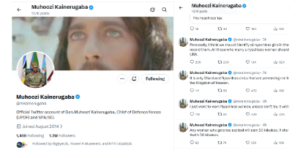
Our review found no post containing the Luganda statement shown in the viral screenshot. There is no verified tweet in which Muhoozi apologises to Bobi Wine or makes the specific claims attributed to him.
Given Muhoozi’s active and highly monitored social media presence, any apology of this nature would be visible on his verified account and easily traceable.
Debunk Verifier Tool Found No Verified Evidence of an Apology to Bobi Wine
We used the Debunk Info Verifier tool to conduct targeted searches to determine whether Muhoozi Kainerugaba had ever issued a public apology to Bobi Wine.
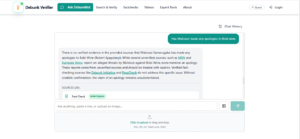
The search returned no verified official statements, credible media reports, or institutional records confirming that Muhoozi Kainerugaba apologised to Bobi Wine.
The Debunk Verifier identified references to alleged threats and political tensions involving Muhoozi Kainerugaba and Bobi Wine reported by various sources. However, none of the verified records contained any apology directed at Bobi Wine.
The tool also indicated that while Muhoozi Kainerugaba has issued apologies in other contexts, including clarifications regarding diplomatic matters, there is no verified evidence of any apology addressed to Bobi Wine.
Given the public nature of Muhoozi Kainerugaba’s official communications and the political significance of such a statement, the absence of any verified record strongly indicates that the viral Luganda apology attributed to him is unsubstantiated.
No Corroboration From Credible Media Organisations
We reviewed reporting from credible Ugandan media outlets, including The Daily Monitor and Al Jazeera, to determine whether any had reported Muhoozi apologising to Bobi Wine or making the statement shown in the viral image.
We found no credible media reports confirming that Muhoozi made such an apology or statement.
Given the political sensitivity and national significance of such a message, it would likely have been widely reported by reputable news organisations if it were genuine.
The absence of any credible media coverage strongly indicates that the claim is unverified.
Source & Context Verification:
Viral Screenshot Lacks Verifiable Source Attribution
The viral image presents the statement in a screenshot format resembling an X post but does not provide a direct link to the original tweet, timestamp, or full interface context.
It is displayed within a TikTok video using caption overlays and reposted graphic formatting, which makes independent verification difficult.
Authentic social media posts can typically be verified through direct links, timestamps, and archived records. These elements are absent in the viral version.
Screenshot Format and Font Style Are Inconsistent With Authentic X Posts
The viral image presents the alleged statement in a screenshot format resembling a post from X (formerly Twitter). However, several visual elements raise credibility concerns.
X uses a proprietary typeface called Chirp as its core interface and tweet font. Chirp was developed in partnership with the Swiss type foundry Grilli Type and is designed with sharp, modern lines and open curves optimised for readability across mobile and desktop devices. Authentic posts on X display this font consistently, with uniform spacing, alignment, and proportional sizing across the interface.
In contrast, the viral screenshot uses a stylised font that does not match Chirp’s distinctive characteristics. The letter shapes, spacing, and proportions differ from the clean, structured appearance of authentic X posts. The text also appears unusually large and formatted more like a graphic overlay than native platform content.
Because authentic X posts use the Chirp font and follow a consistent interface structure, and because the viral image displays font and layout inconsistencies, the screenshot does not provide reliable evidence that Muhoozi Kainerugaba made the statement.
The viral image relies solely on visual presentation without verifiable authentication.
No Institutional Confirmation or Supporting Evidence
There is no official statement from Muhoozi Kainerugaba, his office, the Uganda People’s Defence Forces, or any government communication channel confirming that he made this apology.
In cases involving public apologies or politically sensitive admissions by senior officials, such statements are typically documented and publicly accessible through official channels.
Methodology:
To verify this claim, we applied a structured fact-checking process combining official account review, verification tools, media analysis, and forensic examination of the viral image.
Official Account Review
We reviewed the verified X account of Muhoozi Kainerugaba (@mkainerugaba) to determine whether he had posted the Luganda apology attributed to him. We examined recent and relevant posts and found no statement matching the wording or meaning shown in the viral screenshot.
Tool-Assisted Verification
We used the Debunk Info Verifier tool to conduct targeted searches using relevant keywords and phrases related to Muhoozi Kainerugaba, Bobi Wine, and alleged apology statements. The tool returned no verified official statements, credible media reports, or institutional records confirming that Muhoozi apologised to Bobi Wine.
Credible Media Review
We reviewed reporting from established Ugandan and international media organisations, including Daily Monitor and Al Jazeera, to determine whether any had documented such an apology. No credible media outlet reported Muhoozi making the statement shown in the viral post.
Source Attribution Analysis
We examined the viral image to determine whether it included verifiable source indicators such as a direct link, timestamp, or full platform interface. The image lacked these authentication elements, making independent verification impossible.
Interface and Font Consistency Analysis
We analysed the font style, size, and layout used in the viral screenshot and compared them to authentic X interface standards. We found inconsistencies between the stylised font used in the viral image and the official Chirp font used by X, indicating that the image does not match authentic platform formatting.
Verdict: Misleading
The claim that Muhoozi Kainerugaba posted a Luganda message apologising to Bobi Wine and admitting that Bobi Wine tortured people is misleading. There is no verified record of this statement on Muhoozi’s official X account, no credible media reporting confirming it, and no institutional evidence supporting its authenticity.
The viral image appears to attribute an unverified statement to Muhoozi Kainerugaba without credible evidence.
This fact-check/story was produced by Masai Joel with support from The Debunk Media Initiative and BBC Media Action.