

Misinformation and Decision-Making

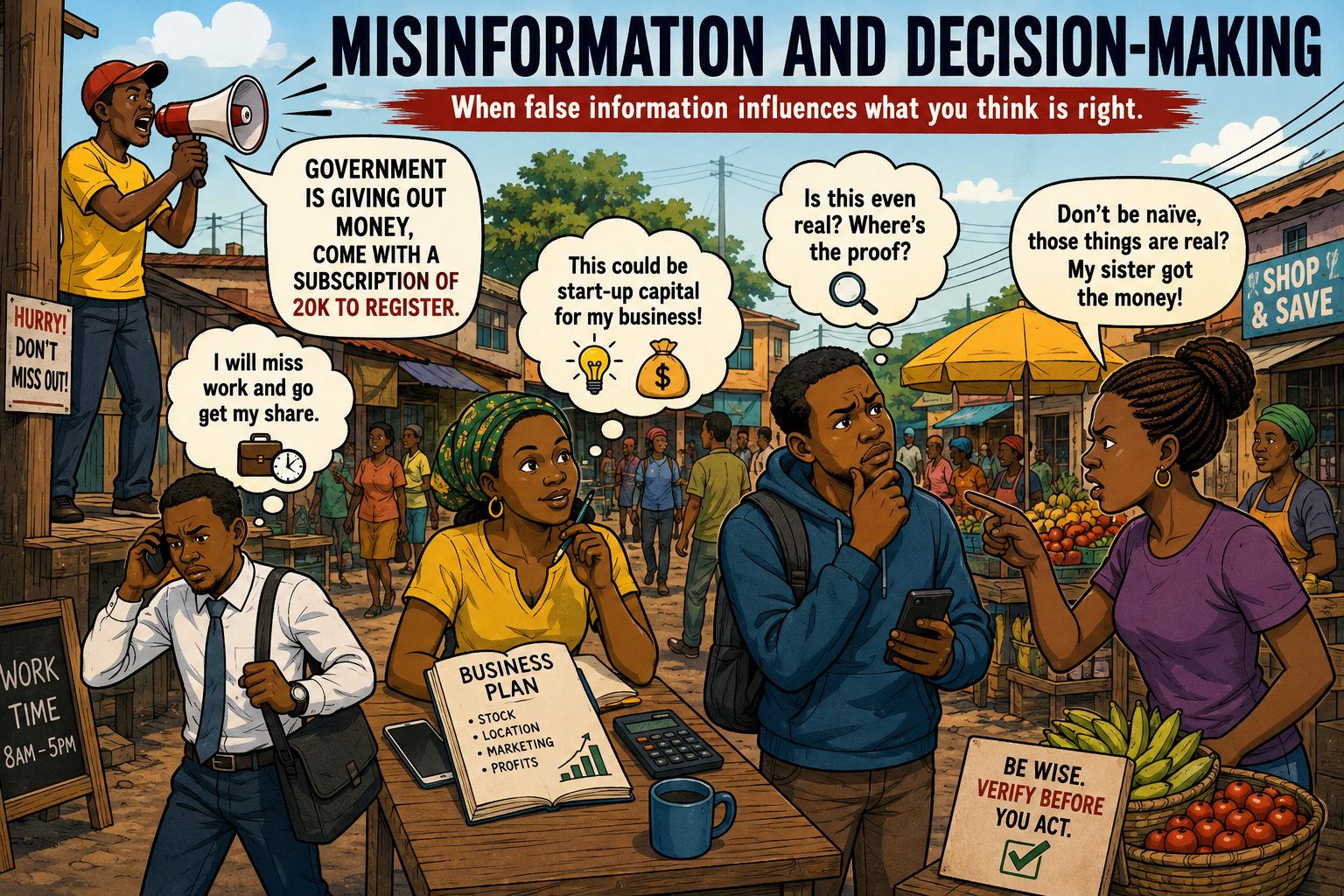
When false information influences what you think is right.
In 2020, Daily Monitor reported that President Yoweri Museveni had ordered the arrest of former Inspector General of Police Kale Kayihura after acting on an Internal Security Organization (ISO) report that alleged Kayihura had a hand in the 2017 murder of former police spokesperson Andrew Felix Kaweesi. A subsequent team of security officials put together by Museveni concluded that the report was false.
On 9 February 2026, Ugandan police arrested four people in Iganga over allegations that they had created fake TikTok and WhatsApp accounts impersonating Natasha Museveni Karugire and used them to solicit money from people seeking financial assistance. Police said the suspects demanded “registration fees” or “processing charges” before promising assistance, and that several victims were defrauded
The details of the ISO case are complicated, and they shouldn’t be reduced to a simple story about one person being fooled. But there is a bigger lesson in it: information is only as useful as its reliability. When information is wrong, incomplete, or deliberately fabricated, the person receiving it can make decisions based on a picture of reality that doesn’t actually exist and this isn’t something that happens only at the highest levels of government.
The Iganga case is a useful reminder of how misinformation can become a personal financial decision. A person sees a familiar name. The profile looks convincing. The promise sounds helpful. They believe they are communicating with someone who can actually provide assistance. Then they send the money.
The fake account wasn’t the whole problem. The real problem was that false information influenced a real decision and the consequences were real too.
It doesn’t matter whether you are a government official, a journalist, a business owner, a student, or simply someone checking WhatsApp before breakfast. Anyone can make a decision based on false information.
Every day, we make decisions using the information available to us. We decide whether something is safe. Whether someone can be trusted. Whether a story is worth sharing. Whether a warning requires action. Which political claims to believe. What to tell our friends and family.
Most of the time, we don’t stop and examine every piece of information from the beginning. We simply use what we have. That’s normal. The problem starts when the information we’re using has been manipulated.
A false health claim can influence whether someone seeks medical care. A fabricated political claim can change how someone views a candidate. A manipulated photograph can make people believe something happened when it did not. A fake job or financial-aid offer can convince someone to part with money. And during elections, when political information is already emotionally charged, the stakes can climb even higher.
This is why misinformation isn’t simply a problem of truth versus falsehood. It’s also a problem of decision-making.
The election period showed why verification matters
Ahead of Uganda’s 2026 General Elections, Debunk Media Initiative, with support from BBC Media Action, trained journalists in fact-checking and verification. The goal wasn’t simply to teach journalists how to label something “false.” The project helped them move from ad-hoc verification toward more structured, evidence-based practices, including the verification of complex political claims. The endline evaluation found that 100% of participating journalists reported having strong professional fact-checking skills after the intervention.
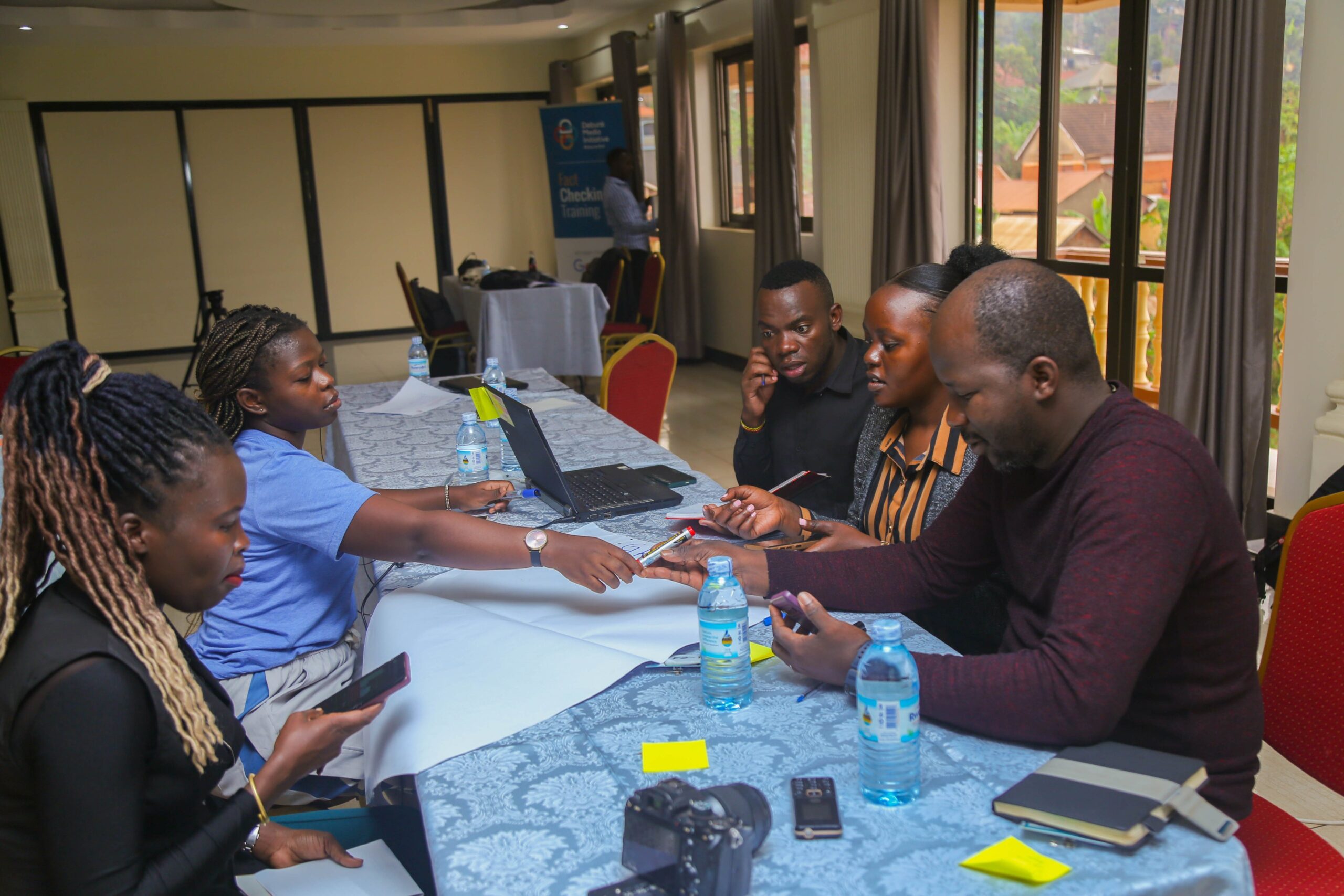
That matters because elections create an information environment where claims move fast. A journalist who publishes an unverified claim can influence thousands of people. A person who forwards an unverified message can influence their family or community. A manipulated photograph can become part of a political argument before anyone has checked where it came from.
The evaluation found that journalists continued to face exactly this challenge: the speed of viral falsehoods, increasingly sophisticated AI-generated content including deceptive audio, and the difficulty of verifying some forms of online content can allow misinformation to move faster than traditional correction efforts.
So verification as a technical skill, is also a decision-making tool. Before publishing, a journalist has to decide whether the information is reliable enough to share, and the public has to make a similar decision to verify the information before passing it on.
But what about the people receiving the information?
Fact-checkers can verify claims, journalists can investigate them, platforms can moderate content, but ultimately, millions of decisions are still being made by people sitting behind their phones, and those people need the ability to pause.
The Debunk–BBC Media Action project offers a useful example of what can happen when that habit is deliberately built. Before the intervention, only 3% of participating community members agreed that they verified information before sharing it. After the intervention, 47% agreed and another 7% strongly agreed that they did.
There was also a shift in how participants responded when they encountered false information. Before the intervention, 73% either disagreed or strongly disagreed that they corrected misinformation when they encountered it. Afterwards, 50% agreed and 10% strongly agreed that they did so.
The objective isn’t simply to make people know what misinformation is. It’s to change what they do when they encounter it.
One participant described his experience that before the training, he would hear information and immediately share it with colleagues at his boda-boda stage. Afterwards, he said he had become more cautious and no longer shared stories or news he wasn’t sure were true.
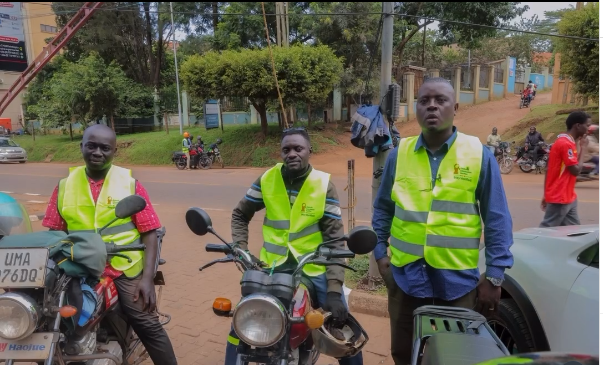
That is the difference between consuming information and thinking about the information you consume.
Verification isn’t always easy and that’s worth saying honestly
None of this is as simple as “just pause and check.” When someone is frightened, in financial distress, or caught up in the pace of an election, slowing down can feel like the hardest thing to do, especially when a message seems to come from someone they trust, or promises to solve a problem they’re desperate to solve. That’s exactly why the people running the Iganga scam impersonated a familiar name and offered financial help. Urgency and hope are effective at bypassing caution.
Building the habit of verification doesn’t mean expecting perfect discipline in every moment. It means having a few reliable steps ready before you need them, so that even under pressure, there’s something to fall back on.
So how do you stop misinformation from making the decision for you?
You don’t have to become a journalist. You don’t need to investigate every WhatsApp message like a criminal case. But you can create a small pause between seeing something and acting on it.
1. Pause when the information demands an immediate reaction
Words such as URGENT, BREAKING, SHARE NOW, or BEFORE THEY DELETE THIS are designed to create pressure. Pressure makes careful thinking harder. Take a moment before you do anything else.
2. Ask what the actual claim is
Strip away the emotion. What exactly is being claimed? Who supposedly said it? What supposedly happened? Once you separate the claim from the dramatic language surrounding it, verification gets easier.
3. Check where it came from
Who published it first? Is the account genuine? Is the person actually who they claim to be? Does the organisation mentioned in the message acknowledge the information? A familiar name or photograph is not proof of authenticity.
4. Look for independent confirmation
One account repeating another account does not give you two sources. Look for reliable, independent sources that confirm the same information. And when the claim is important enough, use fact-checking organizations and verification tools rather than relying only on what appears in your feed.
5. Think about the decision you’re about to make
This may be the most important question: what am I about to do because I believe this?
If the answer involves sending money, accusing someone, sharing a serious allegation, changing your behavior, or making an important political or health decision, slow down. The bigger the consequence, the more important verification becomes.
The decision before the decision
Misinformation doesn’t always need to convince us of an entire story. Sometimes it only needs to influence one decision. To forward. To believe. To distrust. To vote. To send money. To react. To act.
That’s why the fight against misinformation can’t end with identifying false claims. It also has to help people develop the habit of questioning the information they encounter before allowing it to shape their decisions.
The work of Debunk Media Initiative and BBC Media Action shows that this habit can be strengthened. Journalists can become more systematic in how they verify information, while community members can become more cautious about what they believe, share, and correct.
We cannot control every piece of information that reaches us. But we can control what we do with it.
So the next time something appears on your phone and immediately makes you want to believe, share, or act, give yourself a few seconds. Ask one more question: is this actually true?
Because sometimes, the most important decision you can make is the one you make before the misinformation makes it for you.
Want help checking a claim before you share it? Reach out to Debunk Media Initiative’s fact-checking team / debunk information verifier.
STAY VERIFIED.