

Why Your Brain Is More Vulnerable to Misinformation Than You Think

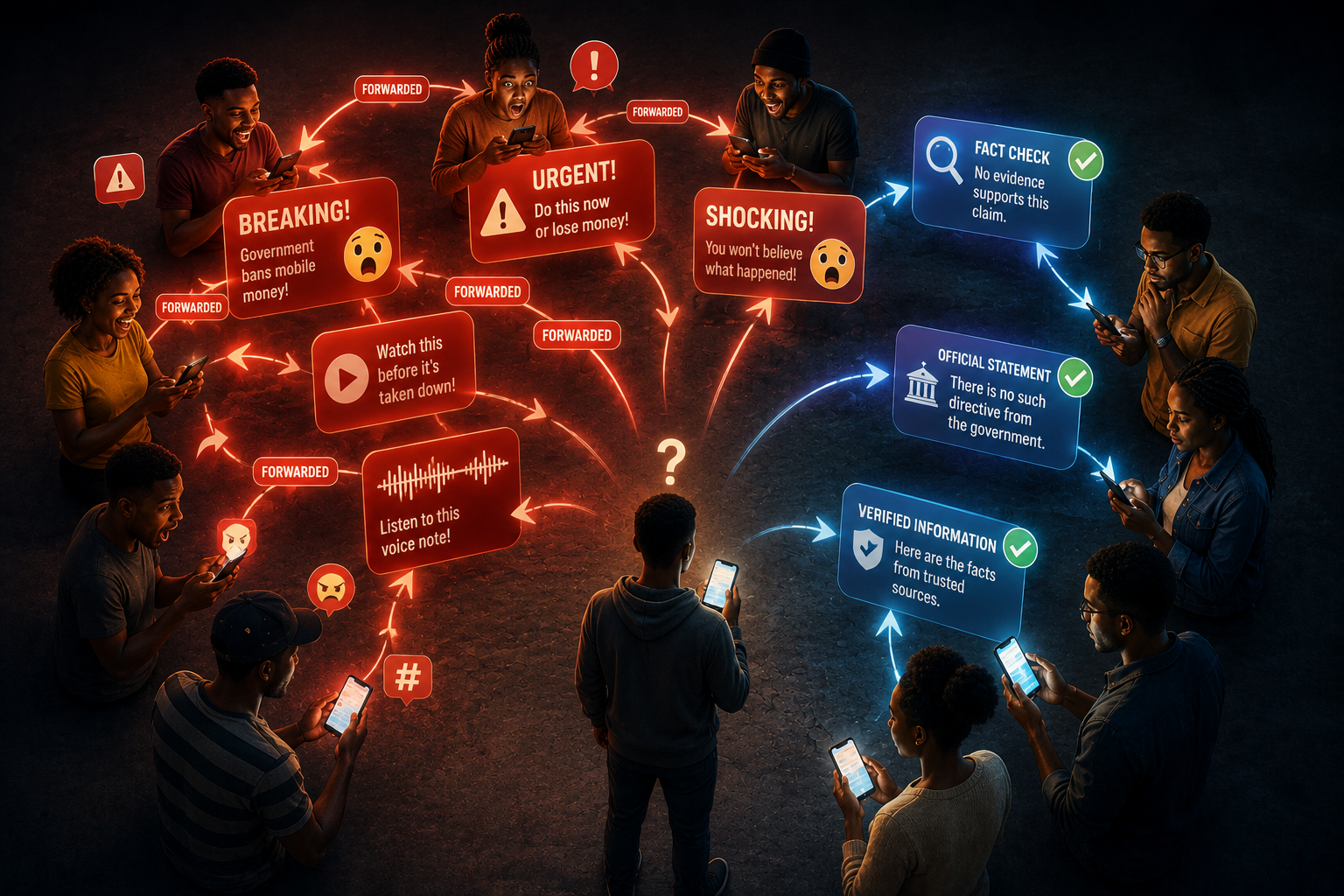
TikTok, WhatsApp, Facebook, Instagram, X, these are playgrounds for all kinds of information. Whether it’s a voice note, a screenshot, a short video or a breaking news post, almost anything can go viral within minutes on any of these platforms.
Social media doesn’t stop to ask whether a post is true or false before it spreads it. If people react to it, comment on it, like it or share it, the algorithms are more likely to put it in front of even more people. By the time the truth catches up, the damage is already done.
The uncomfortable truth is that misinformation doesn’t only fool people who are uninformed. It can fool anyone. Teachers, doctors, lawyers, journalists, engineers or even the people whose job is to verify information.
That raises an interesting question.
Why do otherwise intelligent people believe false information?
It’s tempting to think the answer is a lack of education or critical thinking. But decades of psychological research suggest that our brains don’t always stop to carefully analyse information first. More often, they make quick judgments and only later, if at all slow down to examine the evidence
Every day, we process thousands of pieces of information. If we carefully analysed every headline, every WhatsApp message, and every social media post, we’d never get anything done. So our brains rely on mental shortcuts to decide what deserves our attention and what can be ignored.
Most of the time, those shortcuts serve us well.
Sometimes, however, they’re exactly what misinformation exploits.
And in today’s digital world, where information travels faster than ever before, that matters.
Research conducted by BBC Media Action ahead of Uganda’s 2021 general elections found that misinformation and disinformation had become a significant feature of the country’s information environment, spreading rapidly across social media and messaging platforms, particularly through trusted personal networks. Similarly, findings from Afrobarometer show that while many Ugandans value social media for staying informed and expressing their views, a large majority are also concerned about the spread of false information online.
In other words, misinformation isn’t just an internet problem.
It’s a human one.
So, let’s look at what happens inside our minds when we encounter information, and why understanding our own thinking may be one of the best defenses against misinformation.
Brain Trap #1: Your Brain Loves Shortcuts
This explains why we sometimes react before we’ve had the chance to think, because our brains are remarkably efficient. Every day, they process an enormous amount of information, helping us make countless decisions without consciously thinking about each one. If every decision required careful analysis, life would quickly become overwhelming.
We’d spend several minutes deciding whether to cross the road, whether to answer a phone call, or whether the smell coming from the kitchen meant dinner was ready or something had caught fire.
So our brains developed a faster way of working.
Psychologists call these mental shortcuts heuristics. They help us make quick judgments using the information we already have, rather than analyzing every situation from the beginning.
Most of the time, that’s a good thing.
Our ancestors didn’t always have the luxury of carefully analyzing every possible threat they encountered. If they heard movement in nearby bushes, waiting for certainty could have been a costly mistake. Reacting quickly, even if it turned out to be a false alarm, was often the safer option.
Thousands of years later, our brains still rely on those same shortcuts. The difference is that today’s “danger” isn’t always a wild animal. Sometimes it’s a viral social media post, a breaking news alert, or a WhatsApp message that begins with the word “URGENT.”
And instead of asking, “Has anyone verified this?”, our brains often ask much simpler questions like, does this sound believable? Have I heard something like this before?, did someone I trust send it?
Those questions help us make quick decisions.
Unfortunately, they’re also the questions misinformation is designed to exploit.
You don’t need a completely fabricated story to fool people. Sometimes all it takes is a claim that sounds believable enough to discourage further questions.
Take, for example, one of Debunk Media Initiative’s recent investigations into a widely shared claim that Uganda had ordered MTN customers to withdraw their mobile money because the company was about to stop operating in the country.
The story sounded believable because it mentioned government action, referred to political tensions and created a sense of urgency. Those details were enough to make the claim feel credible for many people.
But when Debunk examined the evidence, the claim quickly fell apart. The Uganda Communications Commission confirmed that it had never issued such a directive and that the notice circulating online was fake.
People didn’t necessarily share the claim because they had investigated it.
Many shared it because their brains did exactly what human brains have been doing for thousands of years:
They responded to what felt like an immediate threat. The problem wasn’t intelligence but speed. And misinformation often wins when our brains choose speed over verification.
Brain Trap #2: Emotion Arrives Before Evidence
“A lie can travel halfway around the world while the truth is still putting on its shoes.”
This quote has lingered across social media platforms multiple times and It’s often credited to Mark Twain, Winston Churchill, and several other famous figures. Ironically, there’s little evidence that any of them actually said it.
But whether or not the quote’s origins are true, the idea behind it captures something researchers have observed for years: emotionally charged information often spreads much faster than carefully verified facts.
Why?
When we encounter new information, our brains often process emotion before they process evidence. That’s why claims that trigger fear, anger, shock or excitement tend to capture our attention long before we’ve had the chance to verify them.
During the COVID-19 pandemic, researchers studying vaccine uptake in Kampala found that 89.7% of participants had encountered unverified rumors about COVID-19 vaccine side effects. More importantly, people who had been exposed to those rumors were significantly more likely to be hesitant about receiving the vaccine.
The rumors didn’t need to be true.
They only needed to create enough fear to make people question the evidence.
Health researchers have observed similar patterns during disease outbreaks, when uncertainty often creates fertile ground for misinformation. In its analysis of health disinformation during Ebola outbreaks in Uganda and the Democratic Republic of Congo, the Konrad Adenauer Foundation notes that fear, uncertainty, and information gaps create an environment in which false claims can spread more quickly than verified public health information.
The consequences can be serious.
During the 2026 Ebola outbreak in eastern Democratic Republic of Congo, misinformation and mistrust fueled hostility towards humanitarian workers. According to Anadolu Agency, several Red Cross volunteers were injured after violence broke out during the burial of an Ebola victim, highlighting how fear and false information can undermine public health efforts and put frontline responders at risk.
The misinformation didn’t spread because it was supported by evidence. It spread because it appealed to fear. That’s an important distinction.
Our emotions are not the enemy. In many situations, they help us respond quickly to genuine danger. but when it comes to information, emotions can sometimes persuade us to react before we’ve had the chance to ask the most important question of all:
“How do I know this is true?”