

EXPLAINER: Does Government Borrowing Affect You? Breaking Down Uganda’s FY2025/26 Debt & Budget

In a post published on the official X (formerly Twitter) account of the Uganda Broadcasting Corporation (UBC), broadcaster Alan Kasujja suggested that citizens should tune out macroeconomics: “You just can’t be worrying about macroeconomic issues, such as how much the gov’t is borrowing,” focusing instead on personal peace and earning an income. It sounds like pragmatic advice on the surface, a classic “focus on what you can control” mindset. But when amplified by the national broadcaster, it frames public borrowing as something completely detached from household finances.

Public Backlash: Citizens Already Know the Connection
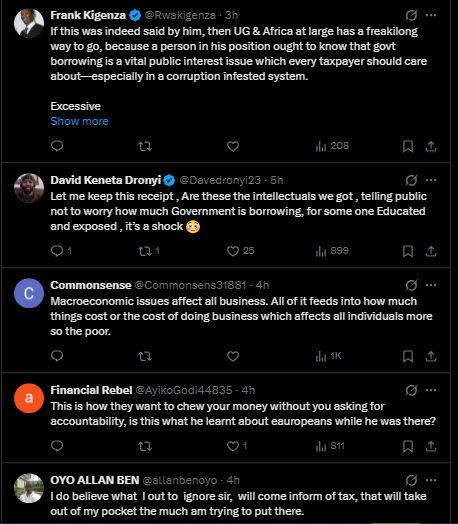
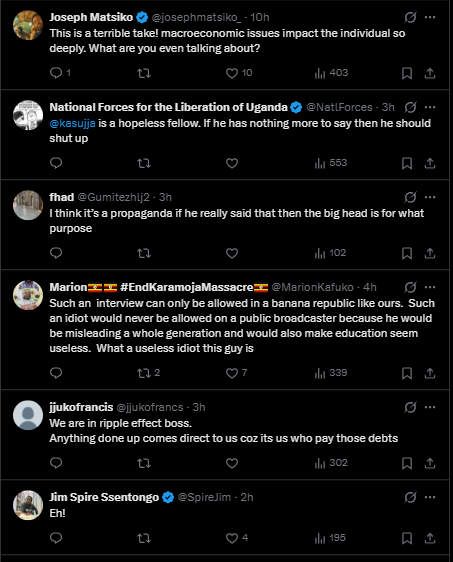
The reaction online was immediate and almost entirely critical. Following the post on X (formerly Twitter), commentators, economists, and ordinary citizens quickly pushed back against the idea that national debt doesn’t touch their daily lives:
- The Tax Connection: Multiple readers pointed out that unmonitored government spending inevitably lands back on household ledgers. As one commenter put it, “What I ought to ignore will come in the form of tax that will take out of my pocket the much I am trying to put there.”
- Cost of Living: Others highlighted how national debt ripples into everyday prices, noting that macroeconomic policy feeds directly into the cost of doing business and the prices of basic goods.
- The Call for Accountability: Many viewed the sentiment as an attempt to discourage public oversight, arguing that public borrowing in a developing economy is a critical issue that every taxpayer needs to monitor.
The public reaction shows a clear intuition: citizens already understand that macro policy affects micro reality. But to move beyond online debate and evaluate whether this concern is justified, we have to look directly at the figures in Uganda’s latest national budget and central bank data.
Nobody’s asking you to spend your evening calculating debt-to-GDP ratios, global interest rate cycles, and commodity shocks really are outside individual control, and stressing over those changes nothing. But that’s a different claim from “government borrowing has nothing to do with you.” If it really didn’t, why do they read you the budget every year? Why bring in financial experts to break it down so the “common man” can follow along? Why tell you exactly how much tax you owe, and fine you if you don’t pay?
This piece draws that line. Concerned and informed, not personally panicked, using only figures that could be traced back to a primary document or a named, on-record statement.
Recurrent vs. Development Spending in Uganda’s Budget
Uganda’s FY2025/26 Budget Speech, delivered by Finance Minister Matia Kasaija on 12 June 2025, itemizes the full Shs 72.376 trillion budget by category. Wages and salaries take Shs 8.57 trillion; “non-wage recurrent expenditure”, covering everything from institutional running costs to medicines to interest payments, undifferentiated — takes Shs 28.33 trillion. Together, recurrent spending is roughly 51% of the budget, against Shs 18.24 trillion (about 25%) for development expenditure.
In Parliament, Shadow Finance Minister Ibrahim Ssemujju Nganda argued some new borrowing was funding recurrent costs rather than the development projects borrowing is normally justified by, warning: “We are now borrowing more to pay back existing loans — a dangerous fiscal spiral”.
Debt Servicing vs. Interest Payments: What the Figures Show
What the Budget Speech directly states about debt-related outflows:
- Domestic debt refinancing: Shs 10.03 trillion
- Debt amortization(repaying the principal balance of existing loans): Shs 4.98 trillion
- Domestic debt repayment to Bank of Uganda: Shs 493 billion
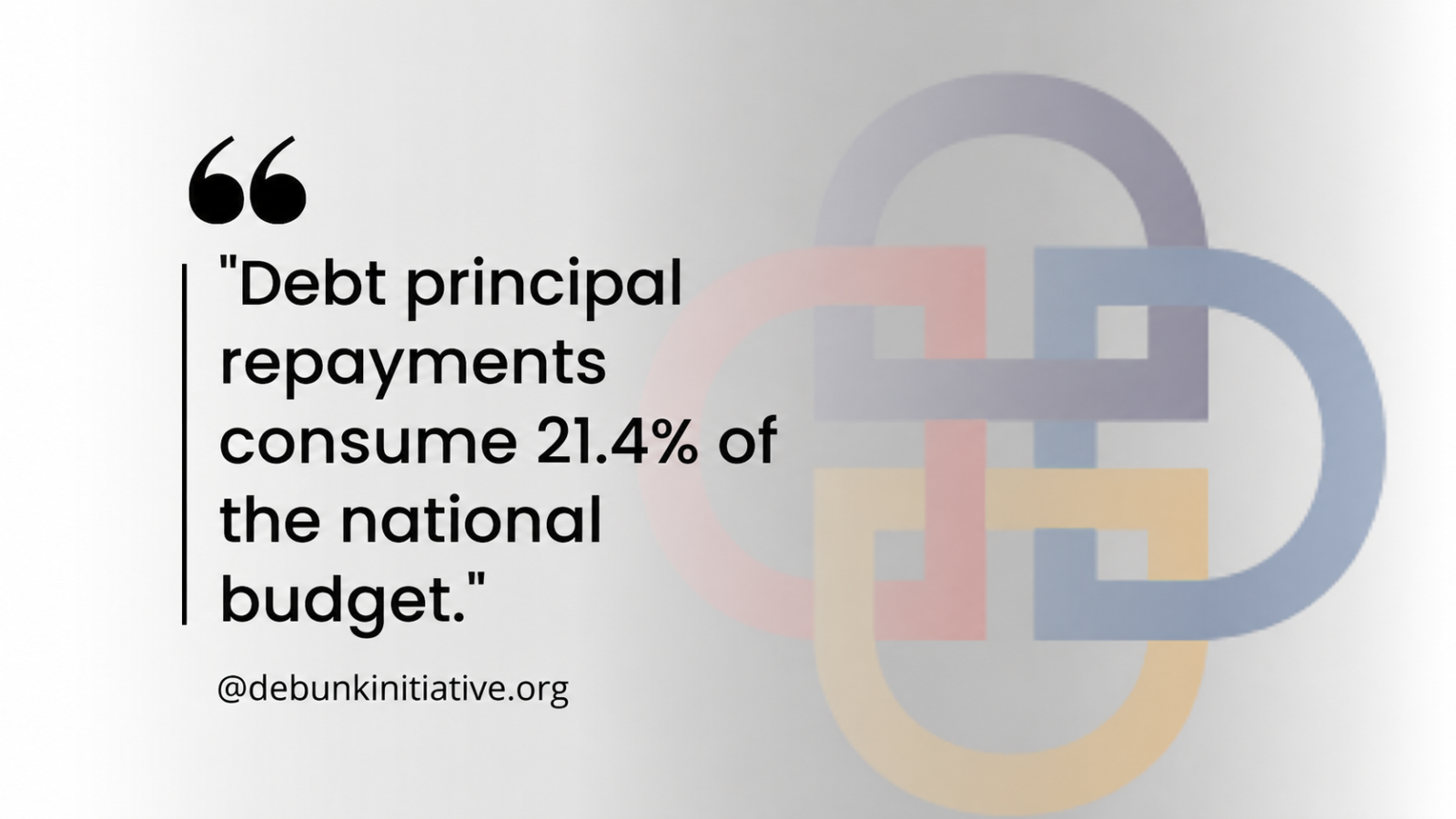
Together: Shs 15.5 trillion, about 21.4% of the total budget that confirmed the principal-side cost of servicing debt. This money is real and it’s leaving the budget every year, but it is a rollover/repayment of principal, not interest. Refinancing maturing debt isn’t automatically a net cost the way interest is, it only becomes a bigger burden if the new debt carries worse terms than the old.
Notably, the Budget Speech does not provide a standalone interest-payment figure anywhere. Interest is folded into the Shs 28.33 trillion non-wage recurrent line along with medicines, wealth-creation funds, science and technology financing, and other categories, with no breakout given.
Revenue Shortfalls and URA Collection Gaps
Uganda Revenue Authority has missed its annual collection target in multiple documented years including, a Shs 458 billion shortfall in 2016/17, a Shs 704 billion shortfall in 2021/22, among others reported over the past decade. In Parliament in June 2025, Ssemujju cited URA as having missed its target for five consecutive years. The government’s own Budget Speech acknowledges the gap, setting out a financing strategy that includes raising an additional Shs 1.89 trillion through improved tax administration and Shs 538.6 billion through new tax measures for FY2025/26, revenue Uganda is not yet collecting.
How Public Borrowing Drives the Private Sector Credit Squeeze
Domestic public borrowing grew 52.7% in the year to mid-2025, against 6.2% growth in external credit. Reporting on a 2026 IMF assessment states that government securities held by Ugandan banks rose from 21% of total banking-sector assets in 2019 to 30.4% by March 2025, with some mid-sized banks holding 50–60% of assets in government debt, and that Uganda ranked 4th in Sub-Saharan Africa for bank exposure to sovereign debt.
The Bank of Uganda’s own Q1 2025 monetary policy statement said plainly: “Excessive government borrowing continues to limit the private sector’s access to credit”. Private-sector credit growth in Uganda ran at 7.9–8.0% in early 2025; a report from the European Investment Bank put the regional East African average at 23.25% over the same period. Although the two figures are a comparison, not proof government borrowing alone explains the full difference, the Bank of Uganda’s own statement is the direct evidence for the causal link, not the comparison by itself.
So, is Kasumba right that government borrowing “doesn’t concern” you? You don’t need to panic, but the verifiable facts tell a clear story:
- Budget squeeze: Debt principal repayments consume 21.4% of the national budget.
- Revenue gaps: Tax collection consistently falls short of official targets.
- Tighter credit: Heavy domestic borrowing makes loans harder to get for small businesses and everyday borrowers.
While the government echoes Kasumba’s stance that borrowing drives growth, central bank data points to tangible economic tradeoffs. Saying it doesn’t concern you ignores where public money and local credit actually go.