

MISLEADING: A 2024 protest video is being used to depict current events in Kenya

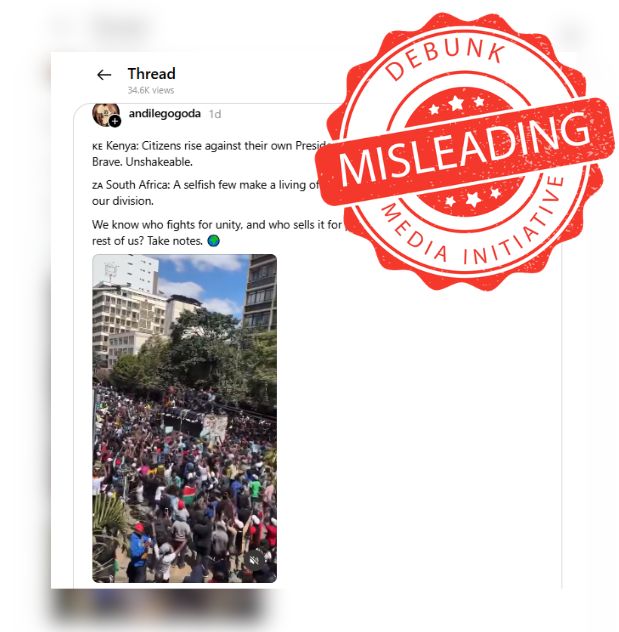
CLAIM:
A post by @andilegogoda on Threads, Meta’s text-based social media platform, claims that Kenyans are rising against President William Ruto to say no to xenophobia, contrasting Kenya’s response with xenophobic violence in South Africa.
FINDINGS:
Our investigation found that the video does not show the current events in Kenya.
A reverse-image search found the same footage being shared by multiple accounts in different languages like here, here, here, and here with captions presenting it as current.
Tracing the footage further led to an X post by @HildaNewton21, published on June 25, 2024, with the caption “Generation Z wa Kenya ni mfano wa kuigwa na Nchi zote za Afrika.”
This places the footage during Kenya’s 2024 Gen Z-led protests.
Those protests were primarily driven by opposition to the Finance Bill 2024, proposed tax increases, the cost of living and wider dissatisfaction with the Ruto administration, not protests against xenophobia. Contemporary reporting from June 25, 2024, describes demonstrators protesting the Finance Bill and tax measures, with the protests eventually escalating into clashes and the storming of Parliament.
What is happening in Kenya now?
There is a genuine dispute involving xenophobia and foreign nationals in Kenya, but the circumstances are more complicated than the post suggests.
On September 2, 2026, President William Ruto’s administration issued a communiqué stating that the government would expand existing legislation to reserve retail trade and specified lower-level jobs for Kenyan citizens, while defining areas where foreign nationals can participate. The communiqué also states that Kenya will continue to encourage foreign investment that brings capital, technology, value addition and quality jobs
The directive caused anxiety among foreign traders, particularly Burundians. Hundreds sought assistance at the Burundian Embassy in Nairobi, with some saying they feared harassment and violence.
Kenyan civil society groups have subsequently planned demonstrations against what they describe as xenophobia and discrimination against African migrants. Human-rights organizations have also warned that enforcement must not result in nationality-based discrimination. The Kenya National Commission on Human Rights said it had received reports of threats, intimidation, discriminatory treatment and online attacks targeting migrant and refugee communities.
At the same time, the Kenyan government says the measures are intended to regulate small-scale retail and informal trade while protecting local livelihoods, and has rejected claims that they amount to a blanket ban on foreign nationals. The government has also established a documentation and registration process for undocumented East African nationals and warned against harassment, discrimination and xenophobia targeting foreign nationals.
Therefore, xenophobia is part of the current debate, but it is not the only issue. The dispute also involves local economic opportunities, foreign traders, immigration status, work permits, business licenses and Kenya’s obligations under East African regional integration agreements. The KNCHR has specifically said that Kenya has the right to regulate immigration and trade, while stressing that enforcement must be lawful and non-discriminatory.
ENGAGEMENT AND PUBLIC REACTION
The post has attracted significant engagement, with more than 900 likes, 415 comments, 111 reposts and 107 shares, and about 34,800 views at the time of review.
The comments also show that many users understood the video to represent the current dispute over foreign nationals in Kenya. Some commenters referred to Kenyans being frustrated with illegal immigrants, while others praised the apparent opposition to xenophobia and expressed solidarity with Burundians and other African nationals.
Other comments went further, with users accusing Kenyans of xenophobia and others defending Kenya’s right to regulate foreign nationals and businesses. This shows that the post has become part of a wider and emotionally charged debate over xenophobia, immigration and the rights of foreign traders in Kenya.
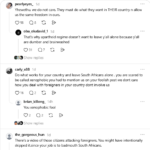
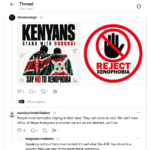
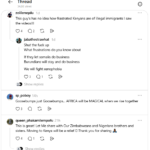
This engagement is significant because the use of footage from the 2024 protests can cause audiences to associate those earlier demonstrations with the current dispute, potentially reinforcing narratives that are not supported by what the footage actually depicts.
METHODOLOGY
- We conducted a reverse-image search using key frames from the video and compared matching results across multiple social media platforms.
- We then traced the footage to its earliest identifiable upload and examined the accompanying caption and publication date to establish its original context.
- We cross-checked the identified date and context with contemporary and current sources, including official government statements and human-rights organizations.
- We also reviewed the post’s engagement and comments to assess how the video was being interpreted by users.
MISLEADING: The video shared by @andilegogoda is not from the current events in Kenya. It was recorded and circulated during Kenya’s June 25, 2024 protests, which were driven primarily by opposition to the Finance Bill and wider economic and political grievances.