

FALSE: Viral Advertorial Claims Ugandan Doctor Revealed a “Simple Method” to Regenerate Joints

Background
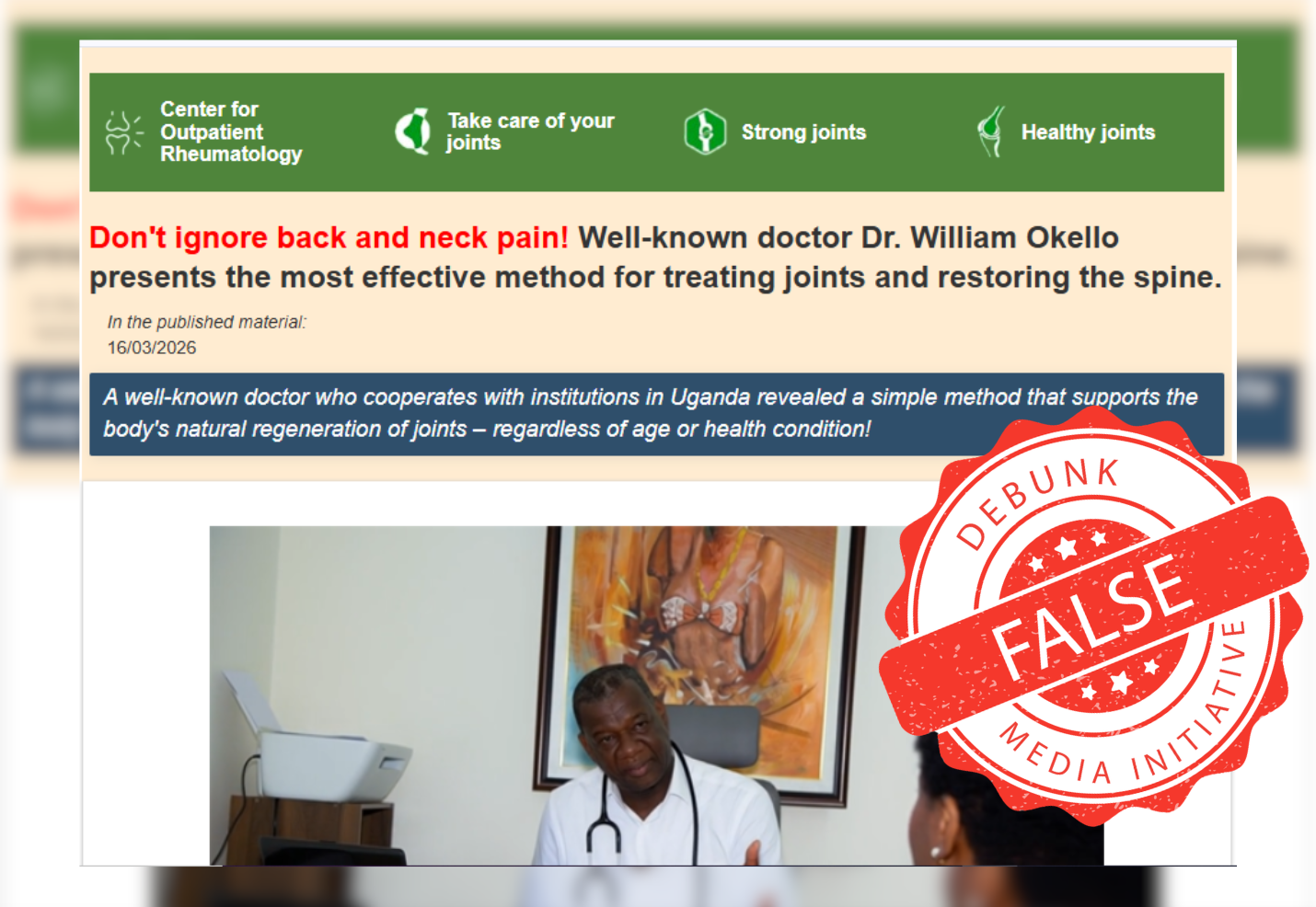
A health-related advertorial is circulating widely across platforms such as WhatsApp in Uganda. The article opens by introducing a supposed Ugandan medical expert, identified as “Dr William Okello”. It claims that he has worked with institutions in Uganda to develop a “simple method” capable of supporting the body’s natural joint regeneration, regardless of age or health condition.
This claim is presented as the central breakthrough, positioning the method as an accessible, non-invasive solution to joint and spine problems. However, as readers move through the advertorial, the promised “simple method” is never clearly explained or defined.
Instead, the content shifts toward alarming descriptions of severe medical outcomes, including paralysis and permanent disability, alongside patient testimonials and repeated promotion of a product called “Artifix”.
Given the prominence of the initial claim and the absence of any verifiable explanation of the supposed method, we investigated whether such a method exists and whether the claims made in the advertorial are credible.
CLAIM:
The advertorial claims the following:
- A Ugandan doctor, “Dr William Okello”, has discovered a “simple method” that enables joint and spine regeneration regardless of age
- This method can prevent severe outcomes such as paralysis caused by spinal conditions
- Conventional medical treatments are ineffective or harmful
- The method is supported by real patient testimonials and medical expertise
Findings:
Our investigation shows this claim is FALSE. The advertorial does not present any identifiable or verifiable “simple method” and instead redirects readers toward a commercial product while using fabricated identities, stolen images, and unsubstantiated medical claims.
The “Simple Method” Does Not Exist in the Article
Although the advertorial repeatedly emphasises a “simple method” as its central claim, no such method is ever described in practical or medical terms.
- No procedure, therapy, or protocol is outlined
- No scientific explanation is provided
- No steps or guidance are given to the reader
Instead, the article transitions into:
- fear-based descriptions of worsening health conditions
- testimonials from supposed patients
- Repeated references to a product called “Artifix”
This indicates that the “simple method” functions only as a hook to attract readers, not as a real or verifiable treatment.
Fake Doctor Identity
The advertorial attributes the discovery to “Dr William Okello” but provides no verifiable credentials.
A search of the Uganda Medical and Dental Practitioners Council register returned a different individual under the name “Dr William Okello”, whose identity does not match the person shown in the advertorial.

A reverse image search of the doctor’s photo reveals it belongs to Any-Grah Prince-Igor, a real physician based in Côte d’Ivoire with no known connection to Uganda or the claims presented.
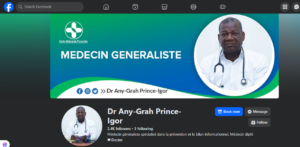
This confirms the use of a stolen image to fabricate authority.
Fake Patient Testimonials
The advertorial includes multiple patient testimonials that are demonstrably false:
“Monica Nalwoga, 89”
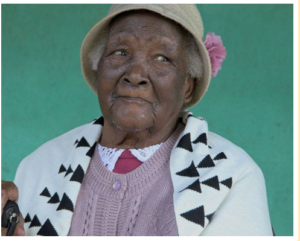
- Reverse image search shows this image belongs to Elizabeth Gathoni Koinange, a Kenyan supercentenarian. The image has been taken from a gerontology records site and falsely attributed to a Ugandan patient.
- “Ivan Mutebi, 44”

Reverse image search shows that the image used is that of Chadwick Boseman, taken at a public event in 2019. Boseman passed away in 2020, making the testimonial impossible.
The use of unrelated and deceased individuals as “patients” constitutes clear and deliberate misrepresentation.
Unsubstantiated Medical Claims
The advertorial includes precise scientific claims such as:
- “98.7% joint and spine regeneration”
- “99.4% cartilage restoration”
- “400% increase in tissue permeability”
No credible medical literature or peer-reviewed research supports these figures.
What Real Doctors Say About Joint Pain
According to doctors interviewed by Daily Monitor, joint problems like Osteoarthritis happen slowly over time as the cushioning between the bones wears out.
As this happens:
- The joints become painful
- movement becomes difficult
- The bones may start rubbing against each other
Doctors explain that no cure can completely restore the joints to normal.
Instead, treatment focuses on helping a person:
- reduce pain
- move better
- continue with daily life
This may include:
- exercise
- physiotherapy
- pain relief medicine
- In serious cases, surgery
This means that claims of “98% or 99% joint regeneration” are not realistic and are not supported by real medical practice.
The “Simple Method” Is Replaced by a Product Funnel
Further investigation into websites linked to the advertorial, including
Artifix Uganda’s official sales page and similar pages, show that the promised “simple method” is never explained.
Instead, the reader is redirected to purchasing a product called “Artifix.”
The website’s focus is entirely on the following:
- product descriptions
- ingredient lists
- pricing and discounts
- order forms
No medical method, therapy, or procedure is described.
This pattern indicates that the original claim of a “simple method” is used only to attract attention, after which the reader is directed into a sales funnel promoting the product.
Evidence of Manipulation
The advertorial uses multiple deceptive techniques:
- Fake scarcity: Limited stock counters that do not change
- False urgency: Deadlines tied to the user’s visit date
- Fabricated comments: Multiple reviews posted on the same date
- Affiliate tracking: URL parameters indicating commission-based marketing
- False authority: Claims of institutional endorsement without evidence
- Fear-based messaging: Graphic descriptions of disability and paralysis
These elements indicate a coordinated marketing funnel designed to pressure users into making purchases.
Methodology
To verify the claims made in the advertorial, we applied a structured fact-checking approach combining identity verification, content analysis, image tracing, medical research review, and website behaviour analysis.
1. Content and Claim Analysis
We first examined the advertorial to identify the central claim. Although the article repeatedly references a “simple method” for regenerating joints, we assessed whether any actual medical procedure, treatment steps, or scientific explanation was provided. We then compared the structure of the content to determine whether the claim was supported or merely used as a narrative hook.
2. Medical Registration Verification
We searched the Uganda Medical and Dental Practitioners Council register to verify the identity of the doctor presented in the advertorial. This step was used to confirm whether the named individual matched a licensed medical practitioner in Uganda and whether the credentials were authentic.
3. Reverse Image Search and Identity Tracing
We conducted reverse image searches on the doctor and patient images used in the advertorial. This helped determine whether the images were original, reused, or taken from unrelated sources. Where matches were found, we traced the images back to their original context to verify whether they had been misused or misrepresented.
4. Medical Evidence Review
We evaluated the medical claims in the advertorial against established clinical knowledge and peer-reviewed research. This included reviewing how conditions such as osteoarthritis are treated in real medical practice and assessing whether claims of full joint or cartilage regeneration are supported by scientific evidence.
We also referenced expert medical reporting, including findings from credible health publications, to understand standard medical approaches such as pain management, physiotherapy, and surgical intervention.
5. Website and Funnel Analysis
We analysed websites linked to the advertorial, including product pages promoting “Artifix.” This involved reviewing content structure, pricing strategies, messaging consistency, and the presence or absence of the claimed “simple method”.
-
Manipulation Pattern Analysis
We examined the advertorial and related websites for common deceptive marketing patterns. This included checking for fake urgency, scarcity claims, fabricated testimonials, repeated promotional messaging, and affiliate tracking indicators. These elements were assessed to determine whether the content was informational or designed to influence purchasing behaviour.
Verdict: False
The claim that a Ugandan doctor revealed a “simple method” to regenerate joints and restore spine health is false. The advertorial does not present any real medical method or treatment, despite using this promise as its main hook.
Instead, the investigation shows a coordinated misinformation and sales funnel built around a commercial product called “Artifix”.
There is no verified medical method behind the claims. The advertorial relies on false authority, misleading scientific-sounding language, fabricated identities, and emotional pressure to promote a commercial product.
Overall, the content is not medical information but a marketing system designed to mislead readers into purchasing a product.